1. Get safe, stay clear
Keep people and pets away from the tree and any downed lines. A hung-up tree is under tension and can shift without warning. Treat every wire as live.
24/7 Emergency · Storm Cleanup · Lakeland & Polk County
Polk County sits inland, so a hurricane here is not a surge event. It is a wind-and-tree event. Lakeland Tree Pros clears trees off houses, opens blocked drives, and documents everything your insurer will ask for, with a real person answering the phone at 2 AM.
Storm damage goes to the front of the line. If a tree is on your house, say so first.
First hour after the storm
Keep people and pets away from the tree and any downed lines. A hung-up tree is under tension and can shift without warning. Treat every wire as live.
Before anything moves, take wide and close photos of the tree, the damage, and anything it hit. Those photos are the backbone of your insurance claim.
We remove the tree safely and provide itemized documentation for the claim. Most policies cover removal when a tree hits a covered structure, typically capped around $500–$1,000 for the removal itself.
Florida law (F.S. 627.70132) gives you 1 year to give notice of a hurricane claim and 18 months for a supplemental claim, and your hurricane deductible applies instead of the standard one. Do not let paperwork wait.
Local knowledge
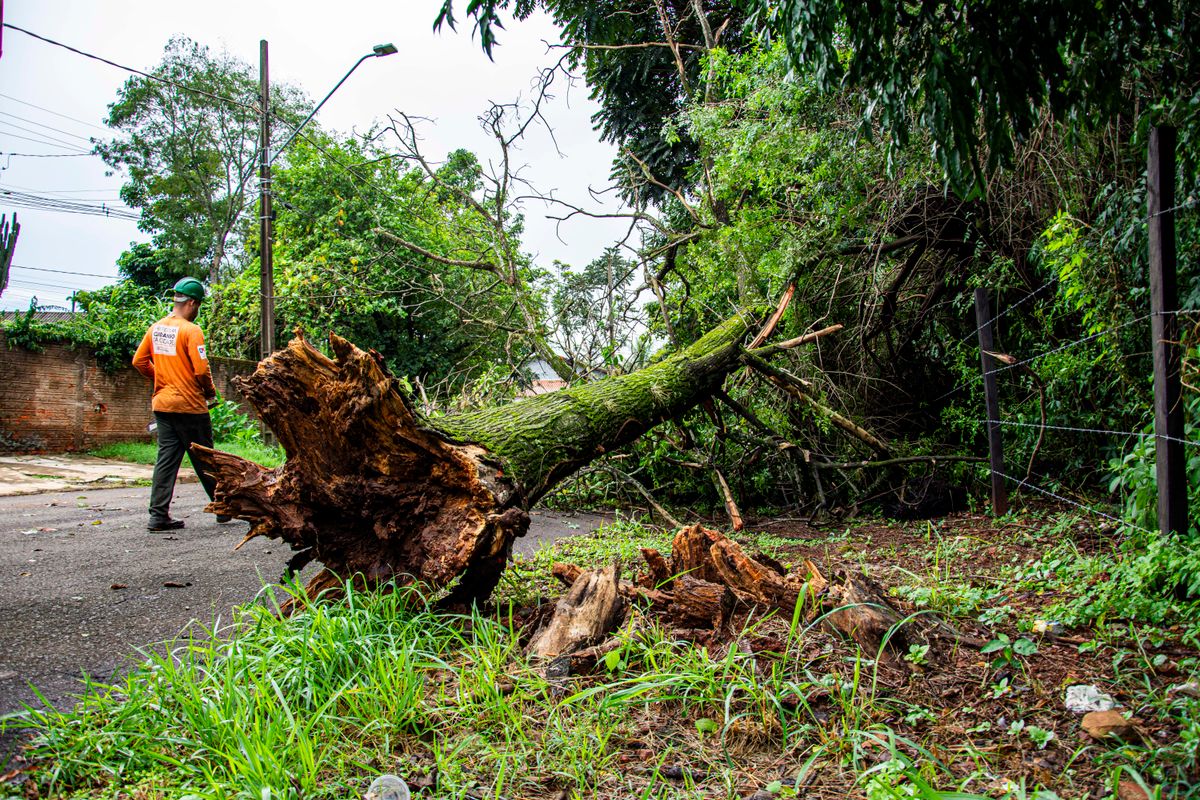
In 2004, the eyes of Charley, Frances, and Jeanne all crossed southern Polk County within about two miles of each other in six weeks. Irma came through in 2017 as a Category 2 with gusts near 115 mph around Mulberry and Lakeland, and 8 of 10 homes lost power. Ian dropped big oaks around Lake Hollingsworth and Lake Morton in 2022. Milton in October 2024 dumped more than 12 inches of rain in 24 hours and left Lakeland 200,000 to 250,000 cubic yards of tree debris.
The pattern is always the same: sandy soil and a high water table keep roots shallow, saturated ground lets go, and the trees that fail are the ones that were already weak, especially the laurel and water oaks planted in the 1920s and 30s that are now at the end of their 50 to 70 year lives. That is why the real storm work happens before the storm: hurricane preparation trimming in March through May, and honest removal of the trees that will not survive the season.
Straight numbers
Emergency tree removal in Lakeland typically runs $800–$3,500 per tree, depending on size, access, and whether it is resting on a structure. Crane work costs more and is quoted before we start.
In Florida, your own homeowners policy generally covers your damage regardless of whose tree it was, unless negligence can be shown. We document the scene either way.
If a tree lands in the yard and damages no covered structure, removal is usually not covered. The quote is still itemized in writing before we cut.
Haul-off is its own line on the quote, and stump grinding can follow once the emergency is over. Nothing is buried in one lump number.
Common questions
Yes. During storms and their aftermath, a person answers around the clock. Trees on houses and blocked driveways get priority over routine work.
That is the job. Trees on structures come off in rigged sections or by crane, never rolled or dragged across the roof. We also coordinate tarping referrals so the interior stays dry.
Season runs June 1 through November 30. The time to trim is March through May, when crews are available and trees can be structurally pruned before the wind tests them.
Treat it as urgent until someone looks. A fresh lean with lifted soil is a tree in the process of failing. Keep clear and call us for an assessment.
Keep exploring
Planned, non-emergency removal of dead, leaning, and hazardous trees.
Hurricane preparation done in spring, before the season tests your trees.
Finishing the job after a storm removal, ground below grade.
What removal, trimming, grinding, and emergency work run in Polk County.
Tell us what came down and where. Storm damage goes to the front of the line, day or night.
Thanks, we got it. We will call you back shortly to schedule your estimate.